
Conversations with Atlanta's Movers and Shakers with Documentarian Filmmaker, Adelin Gasana
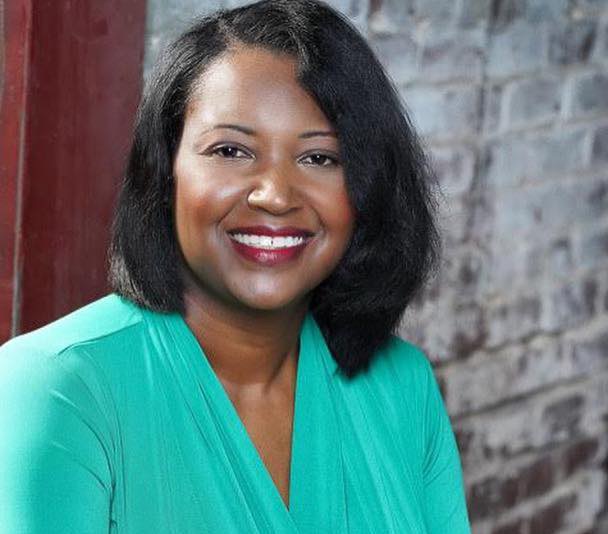

A few weeks ago, we had the opportunity to connect with Rwandan-American independent documentary filmmaker Adelin Gasana.
Born in Rwanda, Gasana has built a career spanning broadcast television and independent film, working as a producer, editor, archival researcher, and director. His credits include work with The Weather Channel and Court TV while his independent projects have explored subjects ranging from Miami's Cuban diaspora to Atlanta history and fashion.
"I've worked for both national media outlets, The Weather Channel and then Court TV as a producer and editor," Gasana says. "

But on the independent film side, I've recently completed my third documentary in five years. All three of which have been made right here in Atlanta–from conception to completion."
Gasana traces his passion for documentary filmmaking back to a moment in high school.
"I snuck into a movie theater that was playing Tupac: Resurrection," he recalls. "Five minutes into the film, I was mesmerized. I remember saying to myself, 'Whatever that is, I want to do it.' “
Afterward, Gasana spent years studying documentaries, watching everything he could find and eventually pursuing filmmaking in college.
A professor at the University of West Florida, helped change the trajectory of his career when he challenged Gasana to stop waiting and start creating.
"He asked me what I was working on," Gasana says. "I thought it was a strange question because I was there to learn. But he told me that was even more reason to start now."
By the time he graduated, Gasana had completed more than 20 documentaries. His most successful student film was a documentary on feminism entitled, The F Word.
It attracted more than 175 attendees at its premiere screening on campus and eventually led to showcase invitations from both Purdue University and the University of Central Florida.
Following graduation, Gasana returned to South Florida and began work on Cuban American, a documentary feature that examined the Cuban diaspora and its 50-year impact on Miami.

"It took about two and a half years to complete," he says. "It was my first documentary to enter the festival circuit, and later it aired on PBS affiliate WLRN-TV."
Shortly thereafter, Gasana moved to Atlanta.

"A few years later, I moved to Atlanta, and that took my career to the next level," he says. "It skyrocketed."
Building a Career Through Documentary Storytelling
While Gasana has directed four documentaries, he estimates he has worked on more than 30 documentary projects in various capacities.
“I've been an archival researcher, editor, producer, writer, production runner, logger, etc.” He says.
His work has covered a wide array of topics, including a documentary on the impact of Black megachurches in the U.S., a fashion film about the history and cultural significance of high heels, and archival research for a documentary on Atlanta's first Black mayor, Maynard Jackson.
That project eventually led to Bo Legs, a documentary about the late Judge Marvin Arrington Sr., the Grady baby who integrated Emory University School of Law, helped transform Atlanta’s airport and was instrumental in bringing the 1996 Olympics to Atlanta. Bo Legs would go on to stream on Delta Air Lines’ In-Flight Entertainment for a six-month run back in 2022.

For Gasana, however, documentary subjects are rarely chosen through a strategic process.
"People ask me what I'm working on next all the time," he says. "Believe me, I don't pick it. It picks me."
Curiosity, he says, is at the heart of the craft.
To view our full conversation, click below:
"To really be a documentarian, you have to have an insatiable curiosity. You have to want to dig deeper into the why."
Discovering Brannu: The Urban Horseman
Gasana credits producer Julia Griggs with discovering Brandon "Brannu" Fulton.
"She found him on the Beltline of all places," Gasana says. "Imagine walking down the Beltline on a Saturday afternoon and suddenly a man on horseback rides toward you. It was like something fell out of the sky."

After speaking with Brandon and learning about his 27-acre property in South Fulton, Griggs began researching his background and realized there was a much larger story to tell.
"She called me and asked what I thought about it," Gasana says. "She wanted me to come on board."
Their first meeting took place over Zoom, but it wasn't until they visited Brandon's property in-person that Gasana fully understood the potential of the project.
"The moment I stepped onto that land, I could see the documentary," he says. "The colors, the landscapes, the camera angles, the drone shots. Once I saw the property, I knew we had a film."
What followed was a two-and-a-half-year journey documenting Brandon's life.
Capturing the Story
One of the most memorable moments came inside a courtroom.
"We had to formally request permission to film, and eventually the judge signed off on it," Gasana says. "I became a fly on the wall."
The scene underscored the central tension of Brandon's story.
"Here's a guy who should be out tending his horses and working his land, but instead he's dealing with legal cases and citations," he says. "There was a lot of gravitas in those moments."
Over the course of two years, Gasana documented every aspect of Brandon's life across all four seasons.

"I didn't want to miss anything," he says. "How he woke up. How he fed his horses. How he worked the land. It was about gathering all those pieces until they became a collage of his story."
When the Story Changed
Gasana says the biggest surprise wasn't a dramatic plot twist but rather discovering what the film was actually about.
Initially, the team considered making a broader film about urban horse culture and farming throughout metro Atlanta.
"The deeper we got into it, the more we realized how unique Brandon was," he says. "There really isn't another story quite like his."
Another shift involved the tone of the film.
"Brandon envisioned a more investigative documentary focused on the people he felt had wronged him," Gasana says.
Instead, Gasana encouraged him to consider the broader impact of his story.
"I asked him what it would mean if a young person watched this film and felt inspired," he says. "Horses changed his life. There was something powerful in that."
Ultimately, the documentary became less about conflict and more about perseverance.
"Everybody's version of the American dream is different," Gasana says. "Not everybody wants the white-picket fence and the two-car garage. Some people want land, horses, and an outdoor lifestyle. Brandon built that life despite the obstacles."
Advice for the Next Generation
When asked what advice he would give aspiring documentary filmmakers, Gasana doesn't hesitate.
"Patience," he says. "We live in a microwave society, but documentary filmmaking doesn't work like that. You have to let the story unfold."
His second piece of advice is equally straightforward.
"Don't wait. Start."
Gasana encourages young filmmakers to begin with whatever tools they have available and focus on creating. Don’t look at opportunities as waiting around for a job or gig.
"Make a five-minute film. Make a ten-minute film. Then watch it and figure out what you could have done better."
While he values film education, he believes experience remains the greatest teacher.
"A lot of the real learning happens in the field," he says. "That's where you discover your voice and the type of filmmaker you want to become."
Above all, he says, documentary filmmaking is about people.
"You have to build relationships. You have to build trust. That's what allows the story to happen."
Gasana sums up his philosophy with a simple rule:
"Find a good story," he says. "Don't fuck it up.”
Be sure to follow Adelin Gasana on Instagram @adelin_gasana or by checking out his website at adeliingasana.com


Comments