
Conversations with Atlanta's Movers and Shakers: An updated conversation with Susan G. Reid
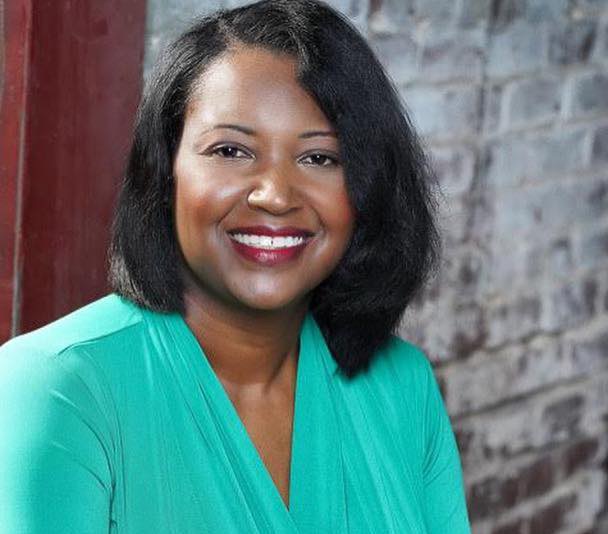
Updated: Jun 13, 2025

This past April, we re-connected with with Susan G. Reid. Reid is a nationally recognized director, writer, producer, coach, and teacher of actors. Reid is an Assistant Professor in TV/Film Directing for Georgia State University’s School of Film, Media and Theatre, and is an active member of the arts community where she is a leading industry expert and consultant in entertainment, having worked extensively as both an agent and a casting director.
Atlanta Film and TV: We had our initial conversation in 2021. What has happened in your career since then?
Susan G. Reid: The biggest change since 2021 is that I transitioned from being a Professor of Practice in Acting at Georgia State University to a tenure-track position as an Assistant Professor, focusing on production, primarily in film. At the time, I was involved with acting and coaching. I also worked as a producer for the theater at GSU and helped to implement systems to support the theater program.
Since then, I have stepped away from my role as a Professor of Practice in Acting and into my new position, which centers more on the film industry. While some classes I teach remain the same, others have changed. My current focus is directing and training our student directors to succeed in the industry.
Atlanta Film and TV: What do you believe is the most important thing an acting student should learn in their first year of training?
Susan G. Reid: My definition of acting is, “to play a truthful and honest character in an imaginary set of circumstances.”
The focus is on truth and authenticity. These are among the most challenging aspects of acting—especially for newer actors. Achieving this requires learning acting techniques and understanding the craft so you can effectively navigate the character.
As an actor, your body is your tool. Your body, mind, and experiences all come into play in every role. You need to learn how to use the craft to create different characters authentically. The most important thing for actors to learn in an intro class is how to live truthfully within imaginary circumstances. Will actors learn this in an intro class? Yes! Will they be able to apply it right away? Probably not because it’s a lot to take in.
Acting is a lifelong journey. If you’re committed to it, you’re also committing to personal growth, embracing change, and continuously training.
Atlanta Film and TV: How do you foster an environment of growth and constructive criticism in your class?
Susan G. Reid: Fostering an environment of growth and constructive criticism is something I actively work on as a director. I often talk about wanting to create a culture with actors and crew on set, much like the atmosphere I aim for in my classes.
The longer we're out in the world, the more experience we build—which, I believe, helps us become more flexible. It encourages us not to hold on too tightly. If I try to control everything, then I am trying to control circumstances. Some things I can control, some I can’t, and I strive to find a balance between the two.
I try to lead with a full heart and with the understanding that I genuinely love what I do. I'm passionate and I bring energy and enthusiasm to the people I work with to bring out their best. And when you're working to bring out the best in others, you're going to receive feedback—on your performance and leadership.
Sometimes, feedback is perceived as negative. I, however, see it as an essential part of the growth process. I also believe it’s all in how the information is presented. I always make it clear that the suggestions I offer are for the betterment of the class or the production, and that we are in this together.
Lastly, I’m someone who maintains an open-door policy. I tell people: if you have a question or concern, reach out to me. Accessibility is a key part of the culture I try to cultivate. I want everyone to know I’m here to support them.
What do you think is the biggest misconception newer actors have about acting when they enter the world of film and television?
"Things don’t happen overnight! When we see huge stars making millions of dollars, doing multiple films, and crafty amazing careers we tend to forget that those same actors started in an acting class. We also forget that they too were doing countless auditions to get to where they are now. "
Susan G. Reid
Stories of things happening in an instance are rare, to the point where you have to focus on getting yourself in there and do the work! I believe as an artist, you have to decide that you want to be in this business for the long haul - which means, you’ll have to adapt. Adaptability becomes one of the most important skills for anyone who’s working in the industry, because nothing is consistent, because it's always ever changing! It's tough, because people will say, ‘oh. I’m going to figure out how to do a great self-tape! But, that’s until the dynamics, and rules of self-taping changes. It’s until a casting director needs something else, or you have a different role that you’re not feeling comfortable with. A lot of the training piece that’s connected to this is how good are you at adaptability?
Atlanta Film and TV: How do you help students develop resilience, especially when faced with rejection or failure in the industry?
Susan G. Reid: One thing I teach students is to not focus only on one thing. I think it’s hard to be a successful artist with a big ‘A,’ (an artist who wears a lot of different hats, because you’re never doing one thing because you’re always doing ten things. I am multiple things, a writer, director, producer. I do all those things.) Not because I volunteer to do them. I did that party, because it’s the adaptability piece, and being resilient is knowing that you have to be willing to change and adjust according to what you need to do in the moment.
For our full conversation, click here -
However, for actors (or anyone in the industry) a lot of it can come down to figuring out what makes you happy, or what brings you joy. Both my career and my work brings me joy, as well as a lot of other things in my life that bring me joy! I believe that if my career is the only thing I’m counting on to bring me joy, then I’m in trouble.
As an artist, you have to be adaptable, and have resources. If the only thing you’re doing is acting, then you are going to have to do something else besides that, and you’ll have to decide what that is. Such as, working as a barista in a coffee shop which makes the socialization and working with people makes you happy, and brings you joy which will balance things out, and helps to pay your bills. There’s not many people who do one single thing in the arts, and that’s all they do.
The combination of those things is finding that happiness, and dealing with rejection. If the only thing you’re focused on is the fact that you didn’t book your last audition, and now you have another one and you're now super worried about whether or not you’ll book that one, because otherwise how will you pay for your bills, then that becomes a problem for you.
All of this has never been the way of the actor, regardless of how much work we had in the Southeast, in LA or wherever it is. It's not how acting and performance works, it's not how most of the industry works! This is why you need to have others things you can do, to fill a void and space and fill a void of you as the actor. Because if you don’t book a role, where will you put your artistic energy that may be in writing, visual arts? As an actor, you have to seek out those things and balance them out, depending on the one thing that will make you successful, which is never good enough in our business.
Atlanta Film and TV: What projects are you currently producing?
Susan G. Reid: I have a couple of spaces left on my holistic Italy acting retreat, which will be in Umbria, Italy during this summer - July 23rd - 29th. I will take a couple of actors to the most beautiful location in the world, to an estate called Siliano Alto where we’ll spend the week talking, socializing, and learning about acting. I will also coach, and tape actors. I’ve also created an acting technique, based on the 30 years I’ve been teaching, and will teach the actors who come on the retreat. Attendees will also get time in the pool, massage, and a beautiful farm to fit table food which will be presented to them. Shine retreat and the Italy retreat are a big part of what right now.
Additionally, I am in post on one short film called Bicycle Face. It will be just over five minutes long. Bicycle Face was a "made-up" medical condition back in the late 1800's, where women discovered a newfound freedom riding bikes, and men felt threatened. Women who rode bicycles were getting flushed, exhausted, aggravated--essentially in their estimation, it was making women not good wives. And, so the men warned against it, saying, ‘Beware of Bicycle Face!’ Our film is a mixed media work. We shot a portion in real time with the most talented actors, Bethany Anne Lind, and Rob Mello. We are working at GSU in conjunction with the School of Film, Media and Theatre and Creative Media Industries Institute, where animation and motion capture are being used.
Lastly, I’ve also written a film, called In The Dirt, which is a conservation piece. I am also currently trying to get funding. And, I am currently in development on a few full length features, and a few short films, as well as teaching and the work I do with Houghton Talent Agency, which is a blessing to be able to talk to the actors who are represented, and give them advice about the industry.
Atlanta Film and TV: Can you share about your blog Reid For It?
Susan G. Reid: I keep my blog on the sidelines, because it is inspirational, and we focus on different chapters in books. Additionally, on my website there is access to past blog posts, and information about the industry that I’ve written, which is another asset to Reid For It.
Atlanta Film and TV: Since our last conversation work in the entertainment industry has slowed down. People are having a hard time finding paid work. What advice would you have for those still looking to pursue a career in film and tv?
We are in the south, and we tend to think we’re in a bubble - however, the slow down is everywhere! There’s a lot of different reasons as to why there’s a slow down, and one of the main reasons is the streaming services have realized it’s not as lucrative as they thought. This is because they realized that they actually have to pay people residuals, as well as a decent salary.
We’re starting to see more commercials coming back into the streaming services that we are watching, and using. I also think we had a few years where we over produced content. So there's always more content than people could absorb, and as a result of that people have pulled back from green lighting projects, and writing checks. It is much harder than it was at least five or six years ago to get something greenlit.All of this, will eventually even itself out, and we will see some of that work return.
I don’t know if we’ll ever be as busy as we were when I worked as a Talent Agent, where I felt under water with all the projects - which was amazing. It is, however, a tough time to get into the business, but it goes back to the basic principles of training is most important! If your response is, ‘ I don’t have the money to get the training’ then go out and get the job that will help you to get the training! Unless your an exceptional actor, you aren’t going to book the project.
You have to continue working on your acting chops. If you’re coming into town, and you don’t have an agent, then you’re going to have to do some heavy lifting! Most of the agents now are by referral only, which becomes a challenge, because you have to have someone who writes an email and says, ‘ I think this actor is great.’ At the end of the day, if you’re still looking for an agent that feels like they don’t have enough of whomever you are on their roster, which could take a while.
So, it’s all about going out there and doing the hard work, and never losing sight. Taking the wins where you can, and also knowing that if all of your joy is wrapped up in one single thing, then it’s going to be hard for you to be successful, because a well-rounded human being will be a better artist who has a variety of interests in their life.
Do you have any G.E.M.S. which stands for Great Educational Moments with Movers and Shakers you would like to share with our readers and viewers?
Susan G. Reid: I believe that I’m an artist, and most of the people working in the industry in some capacity are artists. It’s hard for me to not be artistic in almost everything I do. That's from choosing towels in my bathroom, to writing and directing a short film - my artistic hands will be on that!
But, like everything in life we have a limited bandwidth - and most importantly, I think you should choose carefully where you spend that bandwidth, which becomes fundamental to your success. What does that mean? It means that you can’t do all of the things. For instance, I love the visual arts, but I also know that if I give my focus and attention to the visual arts, then there will be something else that doesn’t get my attention or focus.
If there’s a piece of advice I can give, is to acknowledge the creative bandwidth that you have, and be careful about who and where you give that to, because it’s a limited resource. I wear a lot of hats, but I also have to learn what it means to say ‘no,’ which is hard. Finding that work-life balance is the key to your success as an actor, because if you haven’t found a way to do that, then you’re probably not going to get to where you want to be. This is where you appropriate, and figure out the work-life balance, and bandwidth.
Susan G. Reid
Atlanta Film and TV: How can people connect with you?
Susan G. Reid: Through my website, reidforit.com, and by following me on Instagram @reidforit, and @susangreid


Comments